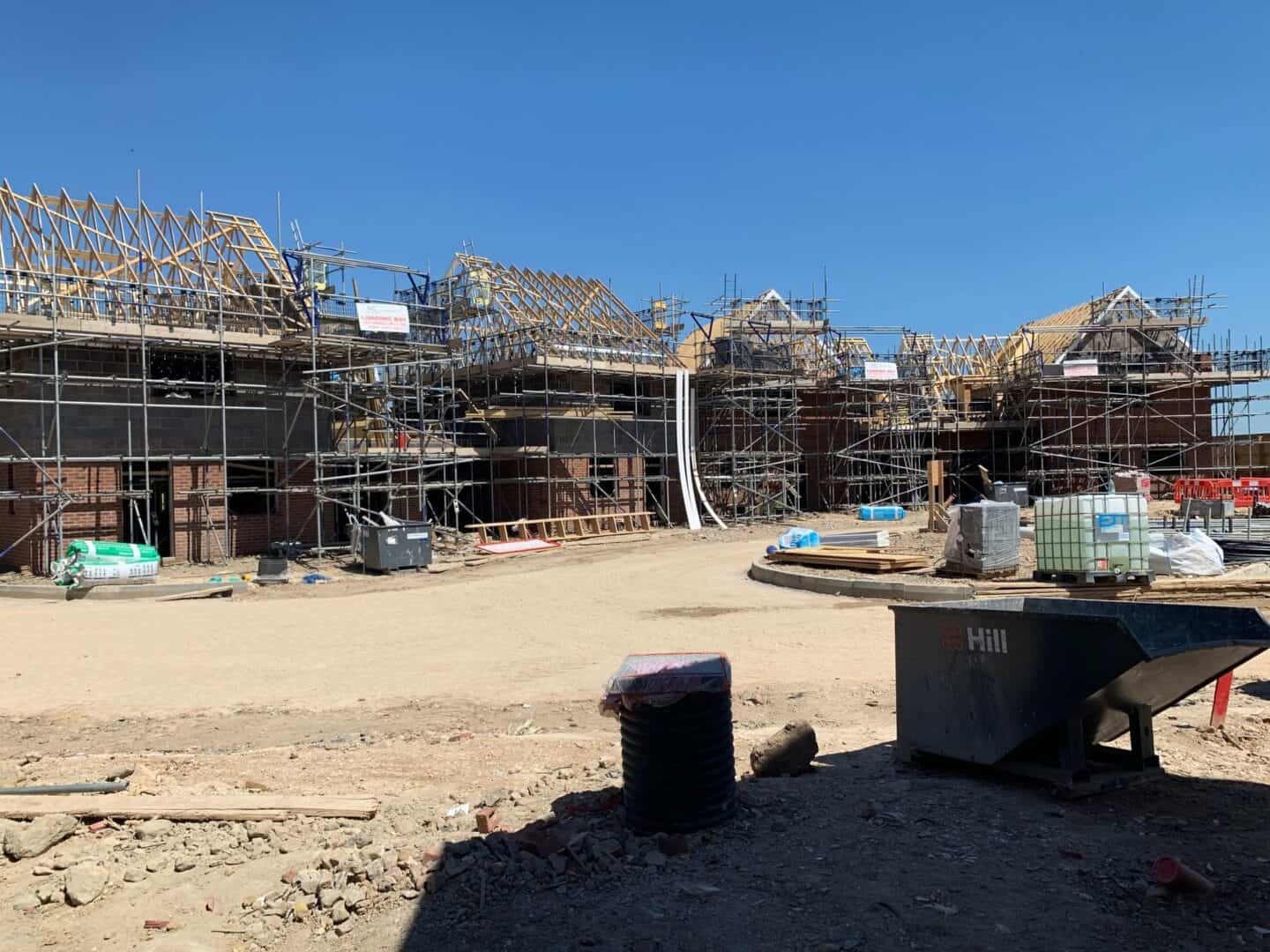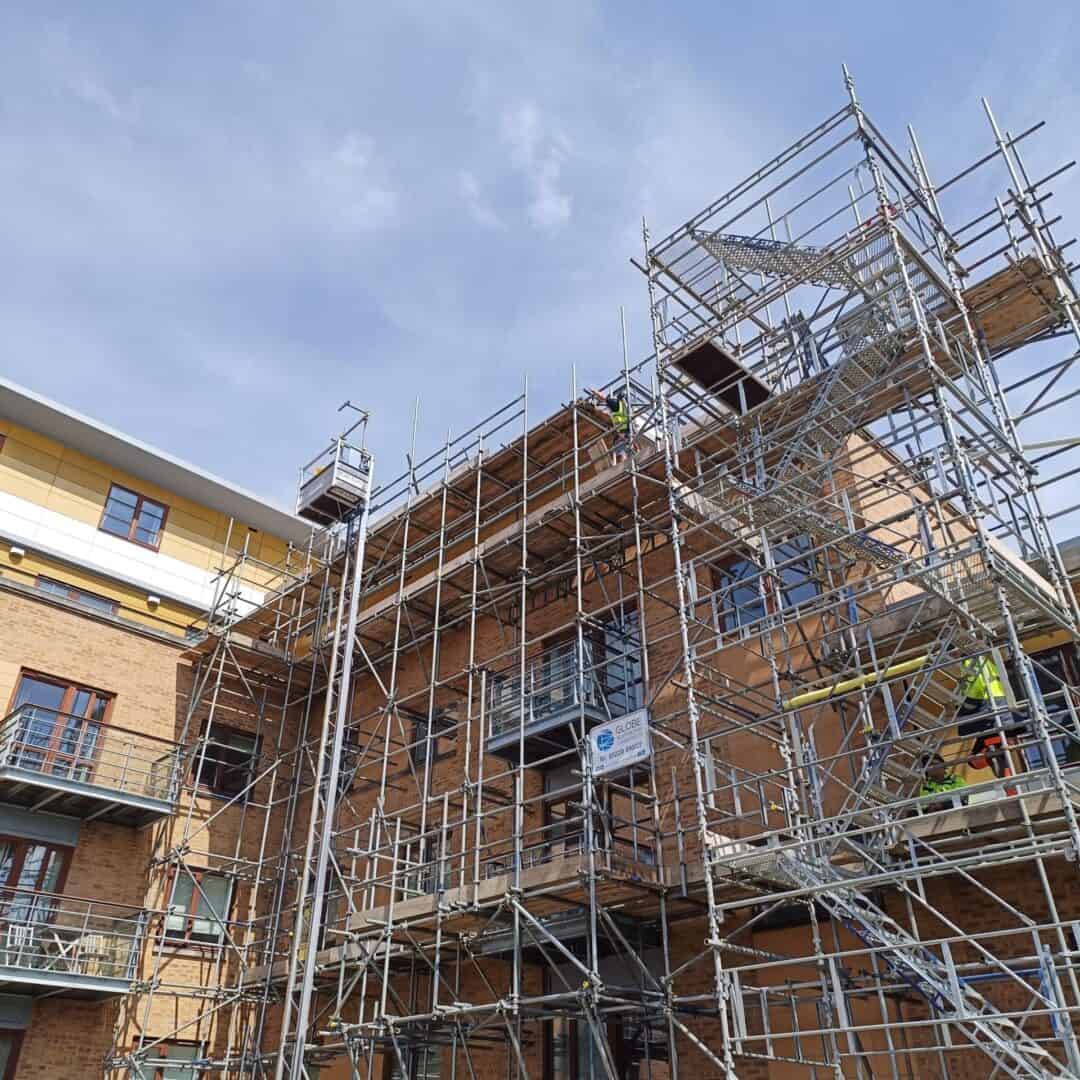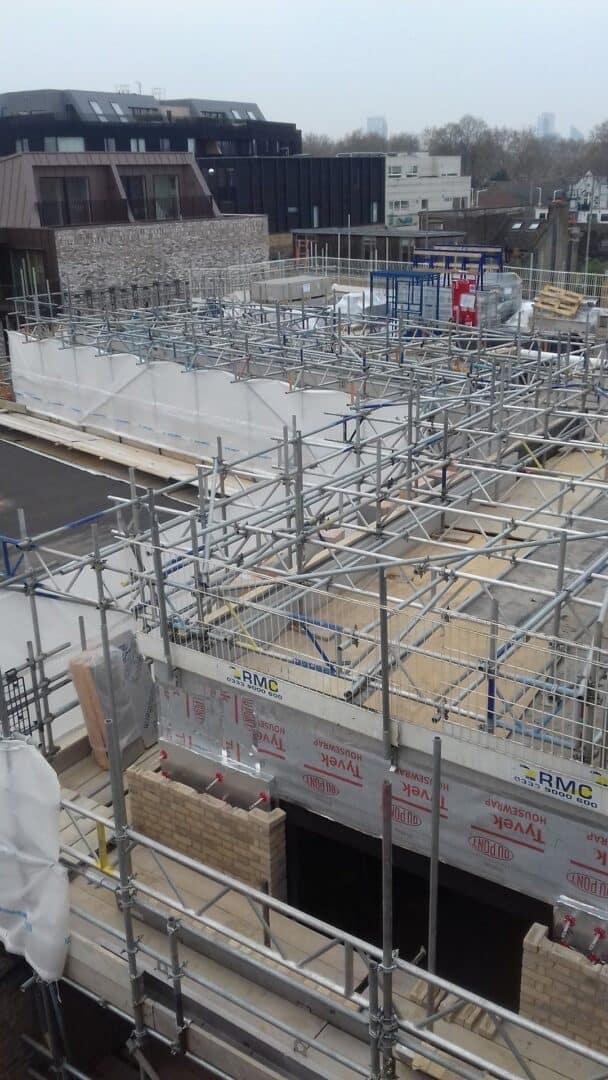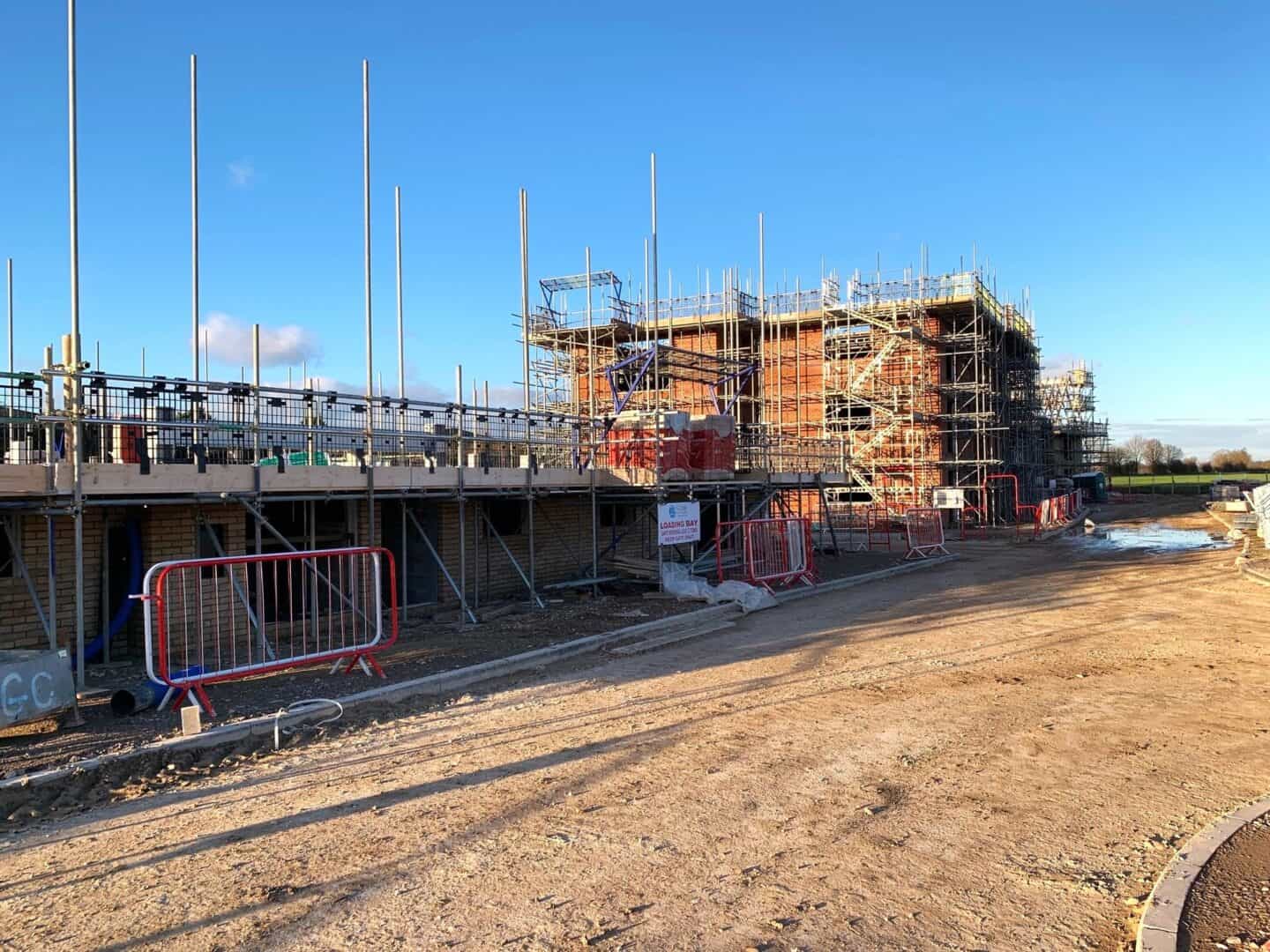
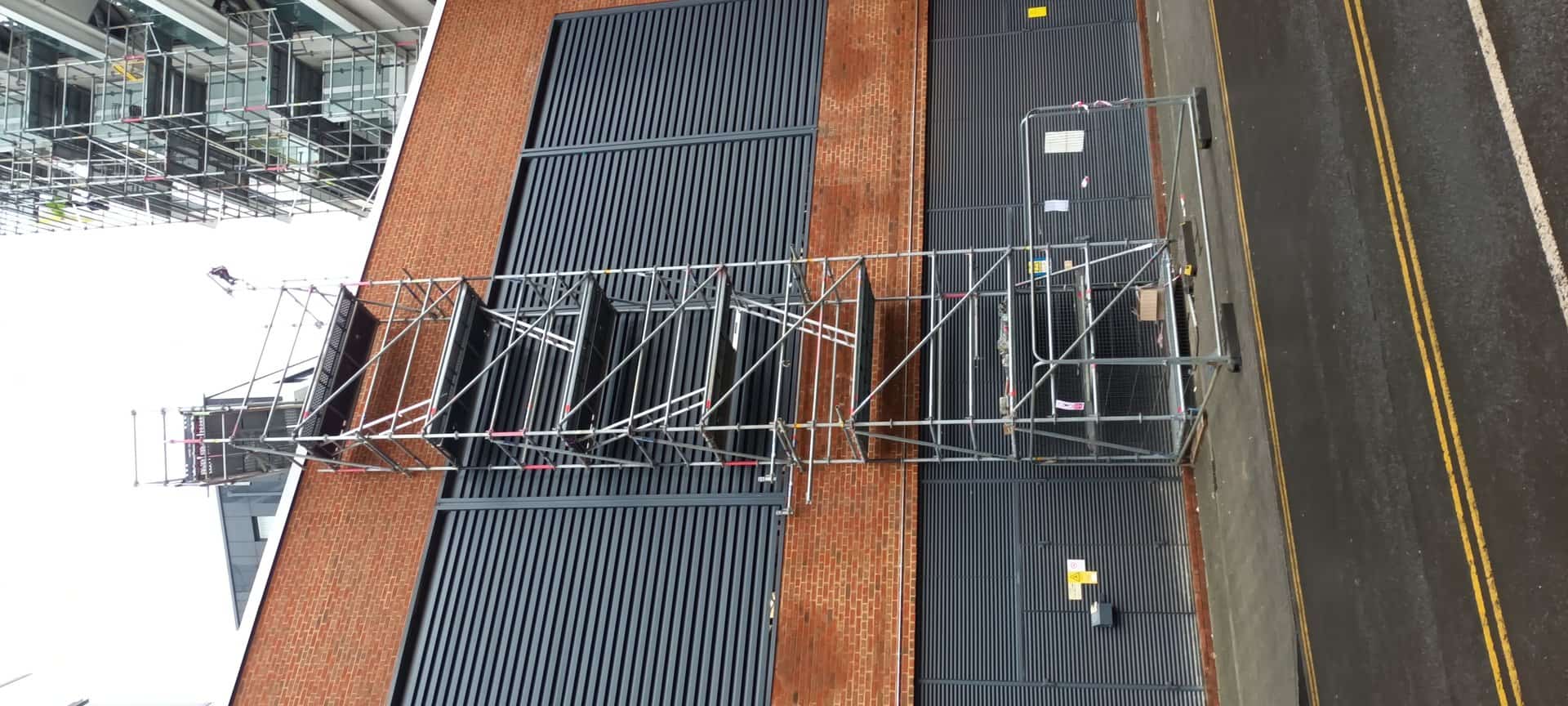
Scaffold tie details on cavity wall new build housing are one of the technical decisions QSs most often treat as a generic line item. They are not. The choice of tie type, the spacing, the fixing depth and the reinstatement method all interact with the cavity wall construction. Get them right and the scaffold performs through the build with no consequence to the finished wall. Get them wrong and you create a compromise that emerges as damp, thermal bridging or a failed inspection later in the programme.
The structural problem is straightforward. A scaffold needs to be tied back to the building it serves, at intervals defined by wind loading, scaffold geometry and the trades using the platform. NASC TG20:21 and BS EN 12811 between them set the technical envelope. On a traditional cavity wall, the outer leaf is brickwork or rendered blockwork, neither of which is strong enough on its own to anchor a working scaffold. The tie has to engage the inner leaf, where the load-bearing structure actually sits.
That single fact drives almost every detail that follows. The tie type has to be capable of reaching the inner leaf. The fixing point in the inner leaf has to be solid masonry or concrete, not a service void. The hole through the outer leaf has to be sleeved so the tie does not damage the cavity insulation, the breather membrane or the cavity drainage path. And the outer leaf has to be sealed at the moment of installation so that water tracking down the cavity does not find a new horizontal path through the tie position.
Where this gets missed is at tender and at design coordination. A scaffold rate priced per square metre without specifying tie type leaves the contractor free to use the cheapest compatible option, which on a cavity wall is rarely the correct one. Drilled expansion anchors set only into the outer leaf can satisfy a generic pull-out test on the day, but they will not carry the design load of a working scaffold in a serious wind event. Through-ties properly engaged into the inner leaf will.
Reveal ties, which sit in window or door openings rather than penetrating the wall, look attractive because they avoid the cavity question entirely. On many cavity wall new builds they cannot be used in sufficient density because there are simply not enough openings at the right positions to satisfy the tie pattern the scaffold needs. Where they are used, they have to be checked for sufficient bearing on the reveal and for compatibility with the window installer’s programme. A tie that is in the way of glazing installation becomes a programme problem rather than a structural one.
Reinstatement is the part QSs most consistently leave out of scope. When the scaffold comes down, every tie hole in the outer leaf is a defect in the building envelope. Done properly, the hole is filled with matching mortar, the cavity sleeve is finished flush, and where the tie penetrated an insulated cavity, the insulation is locally repaired. Done badly, the hole is pointed over from the outside and the cavity is left compromised. The second option is invisible at handover and produces a thermal bridge and a moisture path that will not show up until the building has been occupied long enough for the consequences to emerge.
There is also an interaction with NHBC inspection that is worth flagging. NHBC inspectors examining the building envelope at handover stages will look at scaffold tie reinstatement as part of the wall inspection. Reinstatement that does not match the surrounding mortar, or that leaves visible sleeve material at the wall face, will be flagged. Reinstatement that leaves a hole simply pointed flush over an uncapped cavity sleeve is harder to spot at handover but will fail at the first significant weather event after completion.
For developers and QSs, the practical point is to specify scaffold tie details at tender, not at first inspection. The specification should cover the tie type appropriate to the cavity wall construction in question, the fixing depth into the inner leaf, the cavity sleeve material, the outer leaf sealing detail at the moment of installation, and the reinstatement method on removal. None of this is expensive in cost. All of it is meaningful in the standard of the finished wall.
Globe Cambridge specifies these details at scaffold design stage rather than at site stage. Cavity wall construction details are confirmed before tender. Tie types are matched to the actual inner leaf material and the actual wind exposure of the site. Reinstatement is in scope by default, not a separate negotiation. The documentation that accompanies the scaffold install records the tie positions, the tie types and the reinstatement evidence at removal. The wall behind the scaffold is in the same condition at handover as it would have been if the scaffold had never been there.
On schemes where this discipline is not specified at tender, developers should expect a different outcome. The scaffold contractor will optimise for cost on tie type, take the path of least resistance on cavity sleeving, and leave reinstatement to the next conversation. The cost of getting it wrong sits with the developer, not with the contractor whose tender it was.
Talk to Globe Cambridge
To discuss scaffold tie details on your cavity wall scheme, contact Globe Cambridge on 01223 890727 or email enquiries@theglobegroup.co.uk.