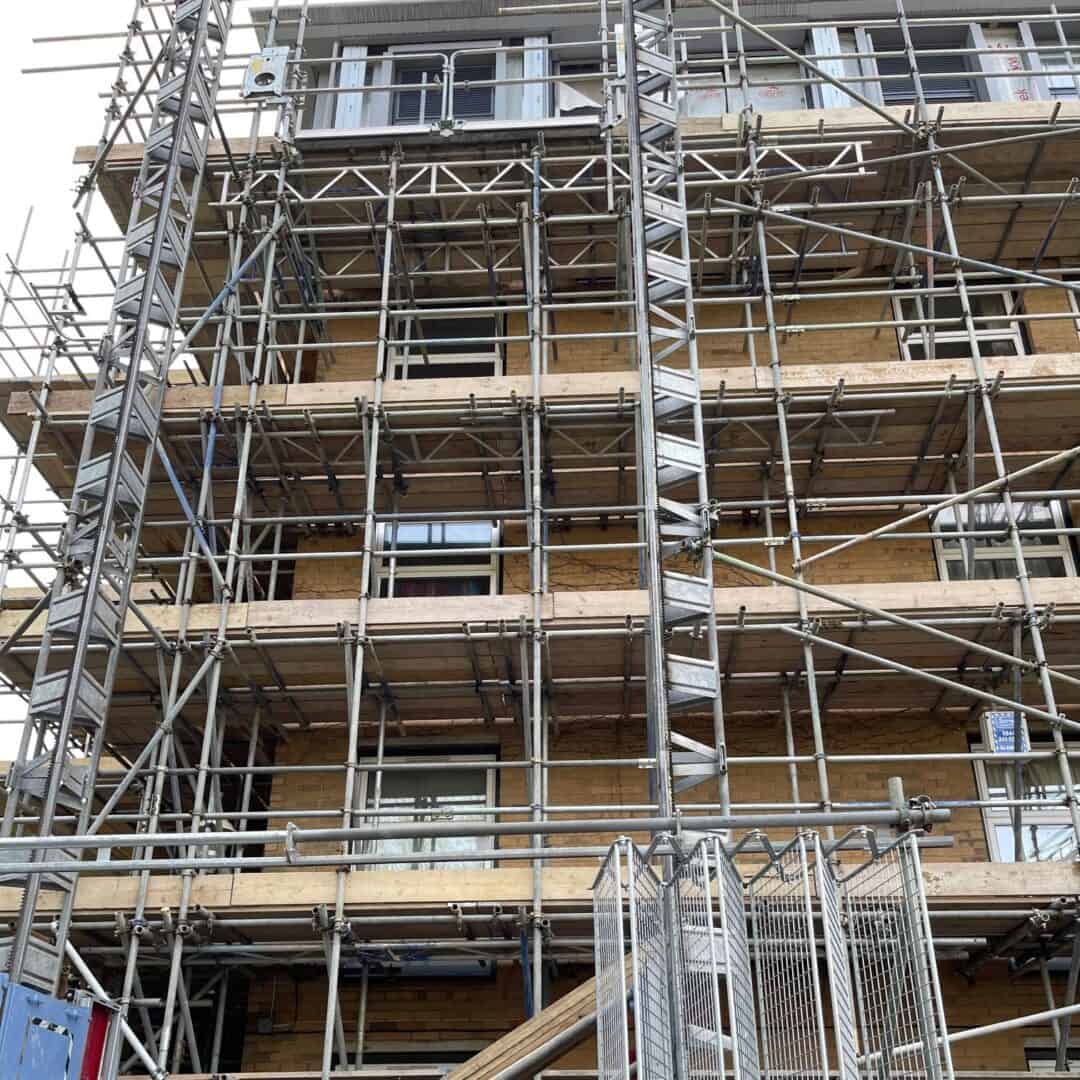
Many times your project depends on scaffolding to provide safe access, load-bearing support and work sequencing; you must integrate scaffold design, competent inspections and permit controls into your temporary works plan because poor coordination can cause catastrophic collapse and serious injury, while effective oversight delivers improved productivity and fewer delays.
Scaffolding’s Role in Temporary Works
You expect scaffolding to do more than provide access; it forms part of the temporary works system, complying with BS EN 12811 performance criteria and commonly using bay widths of 1.8-2.5 m and 2 m lift heights. When you integrate scaffolding with other systems you must check load paths, tie-offs and safe access; see What is Scaffolding? Uses, Benefits and Dangers for practical examples.
Structural support and load distribution
You use scaffolding to distribute imposed loads from workers, materials and temporary plant through ledgers, transoms, base plates and sole boards to the ground. Design should account for live and dead loads, occasional point loads and wind, with engineer-calculated load paths and clear limits on bay loading to avoid platform collapse or excessive settlement.
Interfaces with formwork, shoring, and propping
You must ensure scaffold tie-ins, bearing points and propping interfaces are designed to transfer loads without creating unintended load concentrations; common practice is to use pad plates, packers and adjustable jacks at bearing locations and to record safe working loads at each interface to prevent overloading.
You should coordinate temporary works so scaffold, formwork and shoring share a single load-management plan overseen by the Temporary Works Coordinator. In practice that means drawn interface details, settlement tolerances, and staged loading sequences; for example, integrating scaffold with wall formwork can reduce independent propping by up to 30%where engineered bearing plates and continuous load paths are used. You must also specify inspection frequencies, load checks and contingency measures where dynamic activities (crane lifts, concrete pours) change loads rapidly to avoid structural failure or unsafe deflection.
Planning and Design Coordination
When you coordinate scaffolding with temporary works, align the scaffold programme with the main contractor’s 4-6 week lookahead and the temporary works register to avoid clashes. Use phased sign‑offs at design freeze, pre-erection and handover, and ensure scaffold loads, tie locations and access routes are fed into the site programme. Doing so reduces rework, minimises site delays and mitigates the risk of structural failure from undocumented interface changes.
Site surveys, sequencing, and spatial integration
You must commission a detailed site survey-laser scan to ±5 mm where complex-before finalising scaffold layouts. Sequence works into logical stages (perimeter access, temporary propping, load-transfer activities) and plot crane swing radii, service runs and hoist zones on the same drawing. Highlight live services, tight clearances and areas of restricted access so you can plan ties, edge protection and exclusion zones to prevent hazardous clashes during erection.
Design checks, verification, and temporary works drawings
You should have scaffold designs checked by the Temporary Works Coordinator and independently verified per BS 5975 where required, with drawings that show load cases, assumptions, tie positions and foundation reactions. Keep a signed, revision-controlled temporary works file on site so that every team member can access the authorised drawings and the single point of verification for each scaffold element before erection.
In practice, checks include stability under imposed loads, bracing adequacy, bearing pressures and connection detailing; for example, flag any free-standing scaffold with a height:base ratio above commonly accepted limits (around 3:1) for immediate tie design. You should require a Chartered structural engineer’s stamp on complex schemes, include load tables and a clear register entry for each drawing revision, and document mitigation measures for overturningand excessive deflection.
Risk Management and Safety Controls
You maintain a live temporary works register and RAMS, using bow‑tie analysis and ALARP principles to keep hazards managed; for scaffolding the primary exposures are falls from height and suspended loads. You enforce staged loading (keeping actual loads under design capacity, typically ≤75%), permit-to-work controls, and a rescue plan with trained personnel and equipment on site to reduce escalation from a single failure into a major incident.
Hazard identification, assessment, and mitigation
You carry out site surveys, review drawings and BIM outputs, and log every temporary element in the register. Risk assessments quantify likelihood and consequence, so you apply targeted measures such as edge protection, debris netting, tag lines for suspended fans, and exclusion zones; tie spacing and foundation checks follow design criteria (commonly 4-6 m vertical spacing) to mitigate overturn and progressive collapse.
Inspection regimes, competency, and regulatory compliance
You implement daily pre‑use checks, formal inspections at least weekly, and mandatory checks after any alteration or severe weather, recording findings in a signed logbook or digital app. Competency is proven by CITB/CISRS qualifications and documented TWC appointments, while compliance aligns with Work at Height Regulations and relevant BS standards; formal records and photographic evidence form the legal trail.
You can strengthen regimes by appointing an independent verifier for complex works and by using QR‑tagged components or mobile inspection apps to timestamp defects and closures. On larger façades deploy weekly site audits plus an independent check every 14 days, ensure scaffolders hold CISRS cards, and keep a signed handover certificate for each scaffold lift to demonstrate both competency and traceable compliance.
Logistics and Resource Management
You coordinate labour, plant and materials so programmes don’t stall: align scaffold deliveries with crane slots, issue weekly labour rosters, and keep a live material log to avoid on-site shortages. For example, a five-week façade refurbishment required eight staged deliveries and a two-shift erection plan to hit a 28-day handover. Use digital checklists and weekly stock-take to flag delays early; late deliveries and congested yards are the most likely causes of programme overruns.
Material selection, modular systems, and procurement
Select components by weight, durability and lead time: steel tube for heavy-duty loads, aluminium or modular prefabs where speed matters. Modular systems can cut erection time by up to 50% and reduce working-at-height exposure, while bespoke tube-and-fitting suits irregular façades. Order long-lead items 4-6 weeks ahead, specify delivery slots, and standardise on a single system where possible to simplify training and spares.
Delivery, erection, dismantling, and site access planning
Plan deliveries around vehicle sizes, local restrictions and on-site storage; an articulated lorry (~16.5 m) may need a police-assisted lane closure in central locations. Use a banksman and designated pedestrian routes during offload, and sequence erection from safe tie points to avoid unsafe loads on incomplete bays. Unsuitable access or poor sequencing often forces site shutdowns, so build contingency slots into your logistics plan.
When you detail delivery and erection, map exact drop zones, swept-paths and temporary hardstanding; a typical HIAB offload needs 6-8 m clear and may be limited by 2.5-3.5 tonne/m² ground capacity. Where streets are narrow, arrange 30-60 minute delivery windows, police or council permits, and pre-booked crane lifts-on one inner-London project this avoided 12 separate small deliveries by using a single 10‑tonne HIAB lift for prefabricated decks. Dismantling must follow the reverse erection sequence, logged by operatives and coordinated with waste removal to keep streets clear and reduce plant hire days.
Communication, Responsibilities, and Documentation
Ensure your team adopts clear protocols: a single point of contact for scaffold changes, daily briefings for high-risk phases and documented weekly inspections (7‑day common practice). A 2019 site comparison showed projects with a named coordinator and daily briefings reduced interface incidents by 35%. Use digital logs and paper permits so every change, inspection and handover is auditable and visible to the whole supply chain.
Roles of temporary works coordinators, designers, and contractors
Under BS 5975, you must assign a temporary works coordinator who verifies designs, maintains the temporary works register and signs off on inspections. Designers supply stamped drawings and calculation packs, while contractors follow method statements and present competence evidence such as CSCS/CPCS cards. In practice, the coordinator should review design packs within 48-72 hours and confirm site compliance before any load is applied.
Permits, handover records, and change control
Permit-to-work systems should state scope, dates, loadings and responsible persons, and your handover records must include inspection certificates, as‑built notes and tag status. Change control requires a logged amendment with versioning, risk reassessment and sign-off; industry practice keeps a weekly change log and issues new scaffold tags after any modification. Treat missed documentation as a major risk to safety and programme.
In practice you should standardise permit templates (job reference, start/end, limits, emergency plan), retain handover packs with photographs and NDT or test certificates, and run a formal change-control workflow: raise change request, update drawings with a new revision number, conduct a focused re‑calculation if loads or geometry alter, then obtain the coordinator’s written sign-off before work continues; this sequence prevents hidden overloads and site stoppages.
Case Studies and Best Practices
You will find that effective scaffolding and temporary works coordination reduces delays and incidents; for example, a refurbishment project cut crane idle time by 42% after a coordinated support scaffold plan. Refer to Support Scaffold Construction | Temporary Shoring for detailed techniques that you can adapt on site.
- Case Study 1 – City bridge repair, 2019: integrated scaffolding and shoring saved 18 days (-22% schedule), lifted 6,200 tonnes safely, and reduced on-site incidents from 5 to 1 per month.
- Case Study 2 – Tower block reclad, 2021: coordinated temporary works cut scaffold rework costs by £85,000 and improved turnover, achieving 1.6x productivity versus separate contracts.
- Case Study 3 – Hospital expansion, 2020: modular temporary works systems reduced erection time by 35% and lowered manual handling injuries by 60% across a 12‑week programme.
- Case Study 4 – Industrial plant upgrade, 2018: poor coordination caused a 14‑day shutdown and £230,000 loss; post-incident audit led to new sequencing protocols and a 0% repeat of that failure.
- Case Study 5 – Railway viaduct, 2022: use of pre-engineered shoring saved 27% on temporary works costs and met an 8‑week possession window with zero safety stoppages.
Examples of coordinated successes and failures
You should note that successes often hinge on early sequencing and shared risk registers: the bridge project reduced incidents to 1 per month, while the plant upgrade shows how fragmented contracts can produce a 14‑day shutdown and £230,000 hit; your contracts and daily briefings directly affect those outcomes.
Emerging technologies and continuous improvement
You will benefit from digital tools: BIM, sensor telemetry and drones increasingly allow real‑time checks of scaffolding loads and alignment, cutting inspection time and improving safety margins by measurable percentages.
For example, adopting BIM and IoT sensors has delivered typical gains of 20-40% in clash detection and reduced unscheduled scaffold accesses by 30%; you can implement digital checklists, automated alerts for overloads and drone progress reports to drive ongoing improvement in your temporary works coordination.
Conclusion
With this in mind, you should ensure scaffolding is planned, inspected and integrated with temporary works to protect personnel, maintain structural stability and enable efficient sequencing; by applying clear responsibilities, communication protocols and competent supervision you reduce delays, mitigate hazards and ensure compliance with design and statutory requirements for your project.