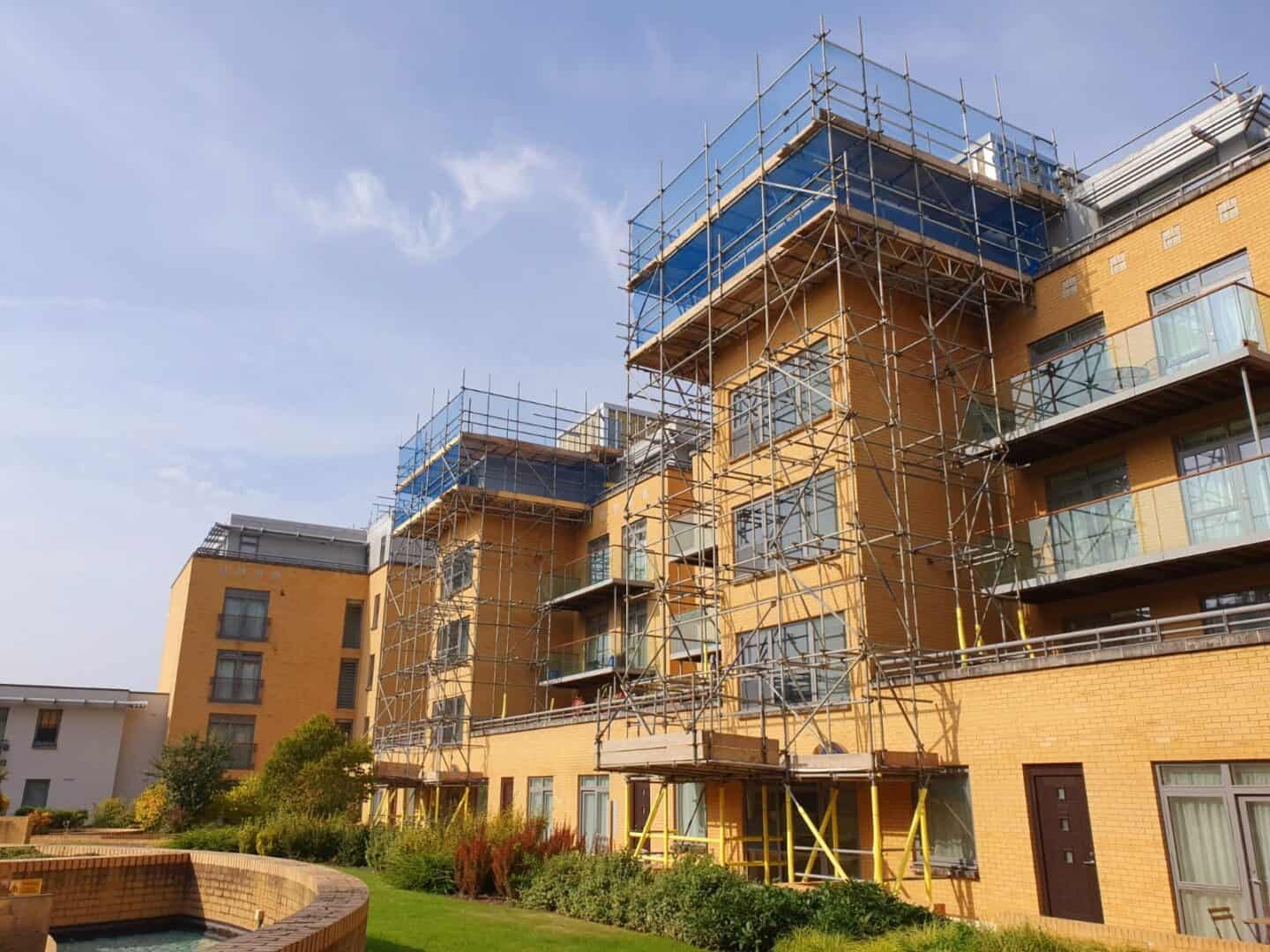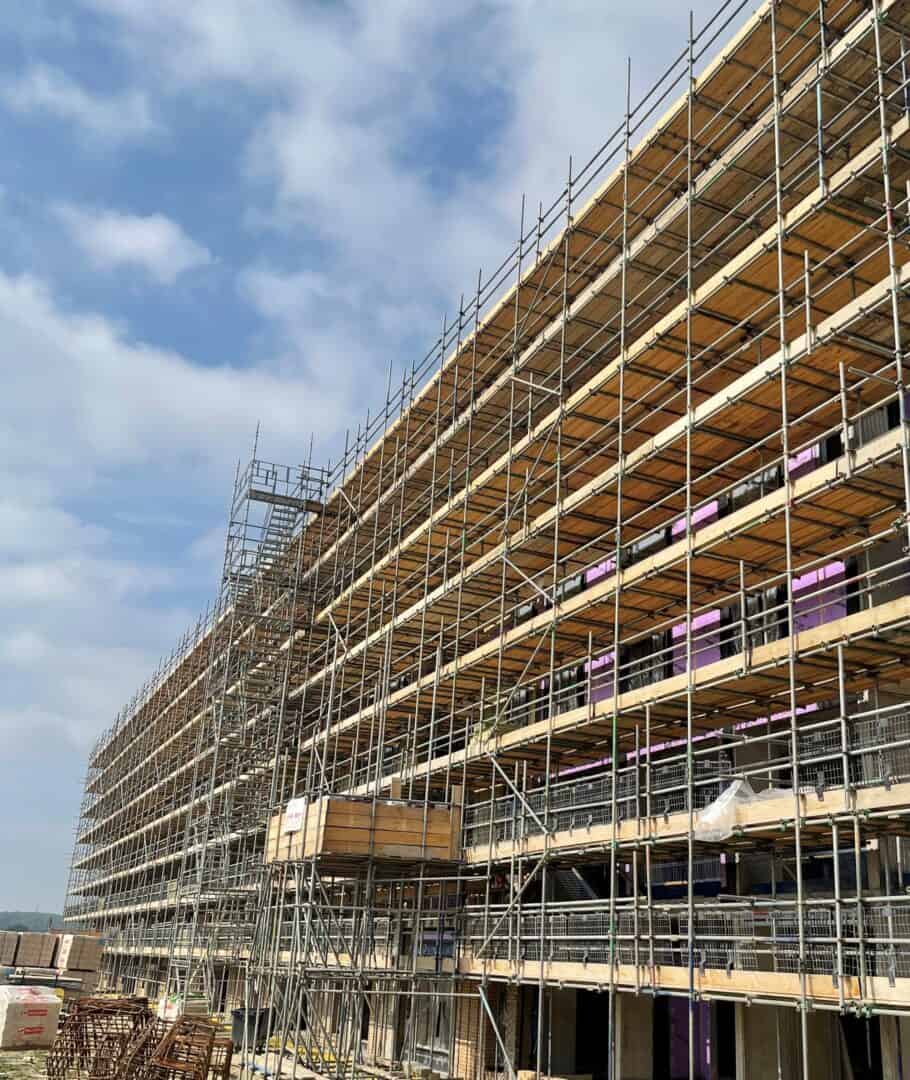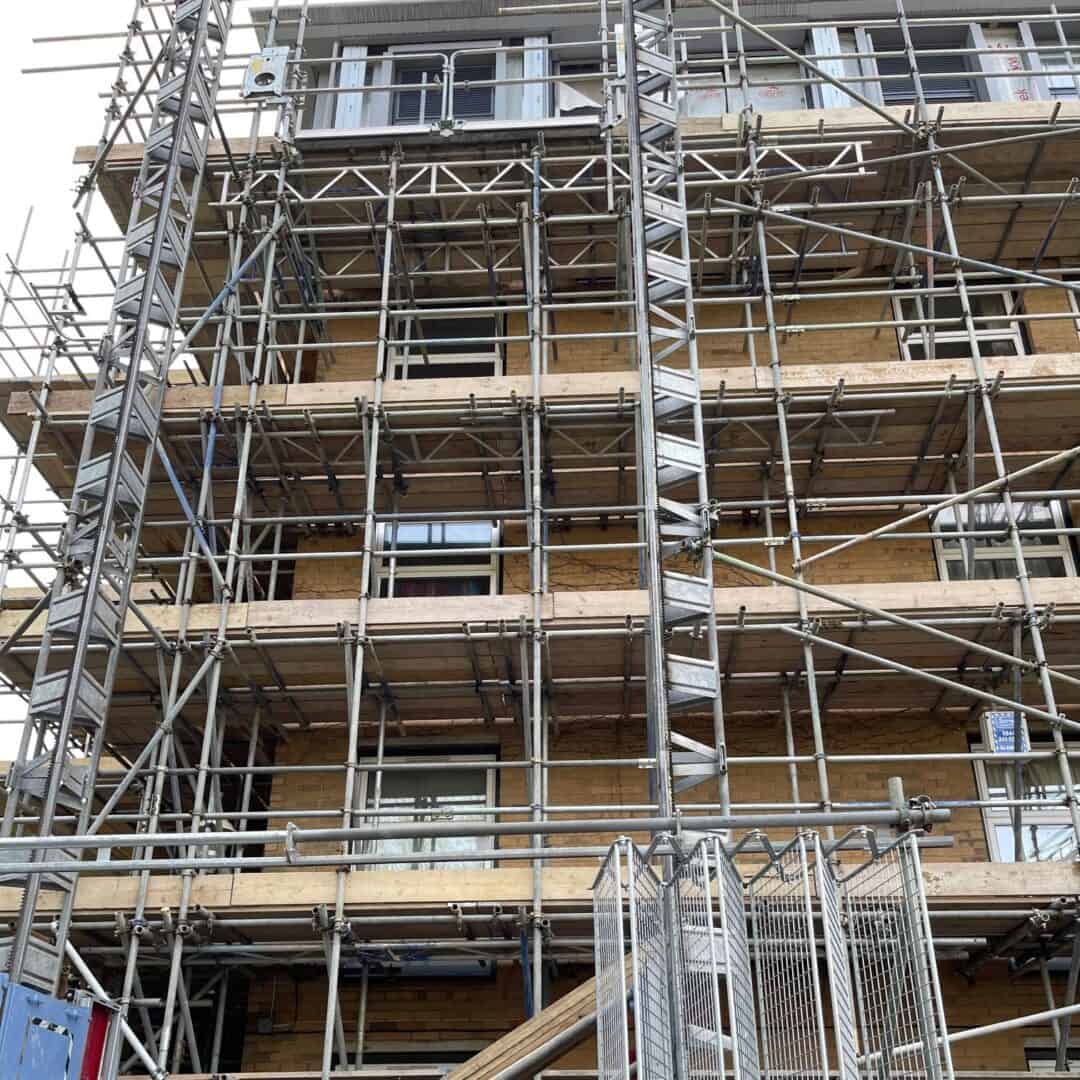
No construction project runs exactly to plan. Designs change, programmes shift, trades run ahead or behind schedule, and the scaffold that was perfect for one phase of work needs to adapt to serve the next. For a principal contractor managing a busy residential development, the ability to modify and reconfigure scaffold quickly and safely — without creating a compliance gap or a programme delay — is one of the most practical things a scaffolding contractor can offer.
At Globe Cambridge, managing change on site is something we deal with on every project. Here’s how we approach it.
Scaffold That’s Designed to Adapt
The best way to manage scaffold changes is to anticipate them. When we plan a scaffold for a new build development, we don’t just think about what’s needed for the first trade on site. We consider the full sequence — groundworks, brickwork, roofing, windows, cladding — and design scaffold that can be adapted through those stages without having to be completely struck and re-erected each time.
This means thinking about lift heights, access points, tie positions, and loading requirements for different trades at the planning stage, rather than discovering conflicts when a new trade arrives and finds the scaffold doesn’t suit their work. Good upfront planning saves significant time and cost as the project progresses.
Reconfiguration Done Properly — Not on the Fly
On a live site, the temptation to make quick scaffold adjustments without involving the scaffolding contractor is understandable — but it’s one of the most significant safety risks in construction. Removing a tie to create more working space, repositioning boards to reach a difficult area, or adapting access arrangements without an engineering assessment can compromise a structure that looked perfectly safe beforehand.
Every reconfiguration Globe Cambridge carries out is planned, executed by our trained operatives, and followed by a fresh inspection before the modified scaffold is returned to use. We work with principal contractors to establish clear site rules around scaffold alterations — making sure site teams understand that changes go through us, not around us.
Responding Quickly When the Programme Demands It
We understand that on a large residential development, programme pressure is real. When the roofing team is ready to move to the next block, they need the scaffold to be ready too. When a brickwork gang finishes ahead of schedule, the window installers need access quickly.
Globe Cambridge maintains the resource and equipment to respond to programme changes at short notice. Our relationship with Globe Roofing — our sister company in the Globe Group — means we’re used to coordinating scaffold availability directly with the roofing programme on shared sites, keeping both trades moving without unnecessary waiting time.
Trade Sequencing and Scaffold Sharing
On many new build developments, the same scaffold serves multiple trades in sequence — bricklayers, then roofers, then window installers, then cladding contractors. Managing this well requires clear communication between the principal contractor, the scaffolding contractor, and the trades themselves about loading limits, access arrangements, and what can and can’t be modified between uses.
We provide clear handover documentation for each trade that takes control of the scaffold, confirming the load class, any restrictions, and the inspection status. When the scaffold transfers from one trade to the next, that handover is documented — not assumed.
Striking and Re-Erecting to Programme
Sometimes scaffold needs to come down in one area to allow access for plant, or to free up space as plots are completed and handed over. Managing the striking and re-erection sequence efficiently — so that the scaffold is available where it’s needed, when it’s needed, without unnecessary double-handling — is part of how a good scaffolding contractor adds value on a large development.
We plan striking sequences with the principal contractor’s programme in mind, coordinate deliveries and collections to minimise site congestion, and ensure that re-erected sections are inspected and certified before use. Nothing goes back up and into use without being checked.
If you’d like to discuss scaffold planning and programme management for your next development, contact the Globe Cambridge team today.